


Fascia: The Pericardium-Diaphragm Connection
Understanding how the pericardium relates to breathing can in turn help clients relax into their massage session.
The three muscles that form the peroneal group—peroneus longus, peroneus brevis, and peroneus tertius—are located on the lateral leg. The peroneus longus and brevis are within the lateral compartment, while the peroneus tertius is part of the anterior compartment. The bellies of all three muscles are somewhat superficial along the fibula. The peroneus longus is most proximal, originating on the lateral condyle and proximal portion of the lateral fibula. The peroneus brevis begins more distal on the lateral fibula and lies deep to the longus. The peroneus tertius also begins more distal, but lies anterior between the peroneus longus and the extensor digitorum longus.
The tendons of both the peroneus longus and brevis run behind the lateral malleolus. The longus extends from lateral to medial across the bottom of the foot, and inserts near the anterior tibialis. The brevis terminates on the plantar aspect of the tuberosity at the base of the fifth metatarsal. The tendons are separated by the peroneal tubercle of the calcaneus, and both insert on the plantar surface of the foot. Because of this, they contribute to ankle plantarflexion, though the longus is more effective in this action. The tendon of the peroneus tertius runs in front of the lateral malleolus and inserts on the top of the base of the fifth metatarsal. This dorsal insertion allows it to dorsiflex the ankle.
The peroneal muscles all evert the ankle, which helps position the foot prior to planting it on the ground during gait. This motion is also used when moving the body from side to side, where the peroneals help pull the center of gravity from medial to lateral over the planted foot. This side-stepping movement is common when walking over and around objects—for example, when hiking. Ankle eversion also helps initiate and control direction changes. Activities that require pushing with the legs from side to side, like skiing and skating, rely on the peroneals, along with the hip abductors, to power the movement. Weakness, poor mobility, or lack of control of the peroneals may contribute to injuries such as lateral ankle sprains, or chronic conditions such as tendinitis or plantar fasciitis.
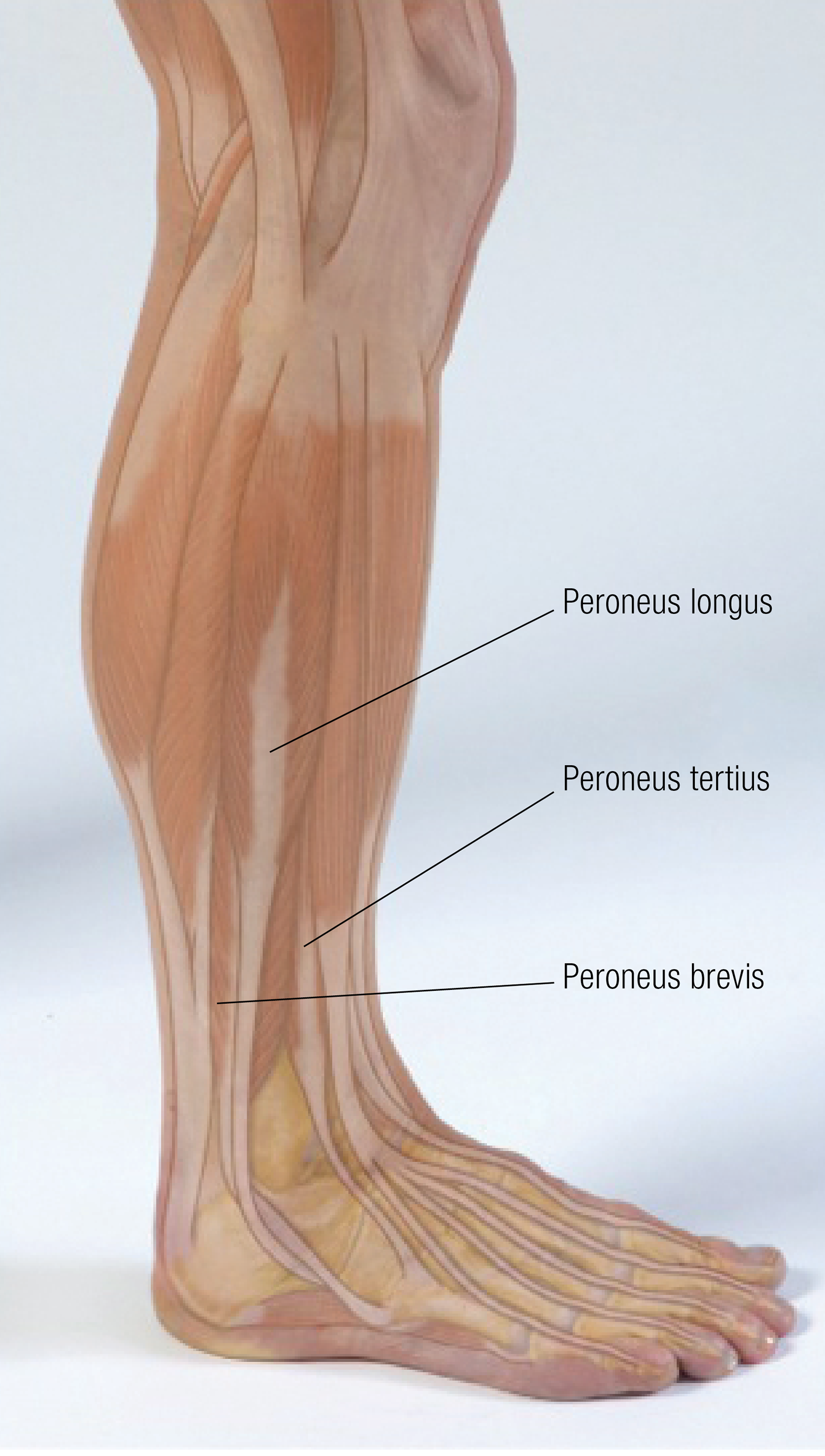
Attachments
Actions
Innervation
Position: client supine.
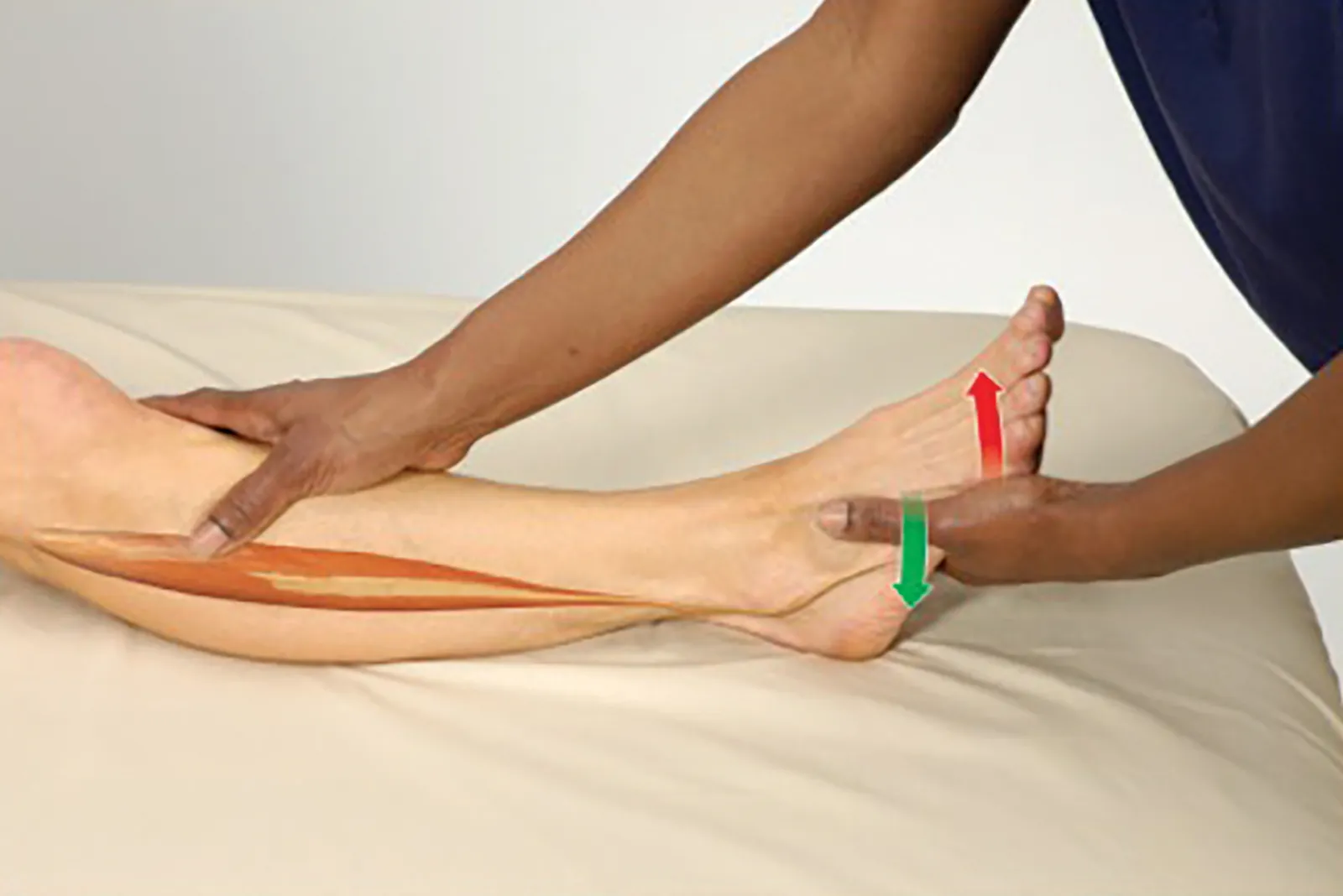

Editor’s note: The Client Homework element in Functional Anatomy is intended as a take-home resource for clients experiencing issues with the profiled muscle. The stretches identified in Functional Anatomy should not be performed within massage sessions or progressed by massage therapists, in order to comply with state laws and maintain scope of practice.
Understanding how the pericardium relates to breathing can in turn help clients relax into their massage session.
Superficial fascia may not get the same attention as deep fascia, but it plays an extremely important role in the organization of tissues and the structure of the body.
Understanding tendons—their shapes, lengths, and organization—improves an MT’s touch vocabulary and facilitates a more skilled touch.
While the neck is a bridge, a pathway, the position of the neck and head can also indicate a multitude of other things happening beneath the surface.