

Strengthen Your Vagal Tone
Use this self-care technique to generate a state of calm alertness.
Dull ache in your deltoids? Screaming pain between your shoulder blades? Those aches and pains could be from locked-long, weak, and flaccid external rotators (infraspinatus and teres minor) and scapulae retractors (rhomboids and middle trapezius). Because our work requires so much shoulder and arm movement, massage therapists are at high risk for rotator cuff injuries. Save your shoulders—and your career—with two simple strength-training exercises for those overburdened and exhausted muscles. They will thank you!
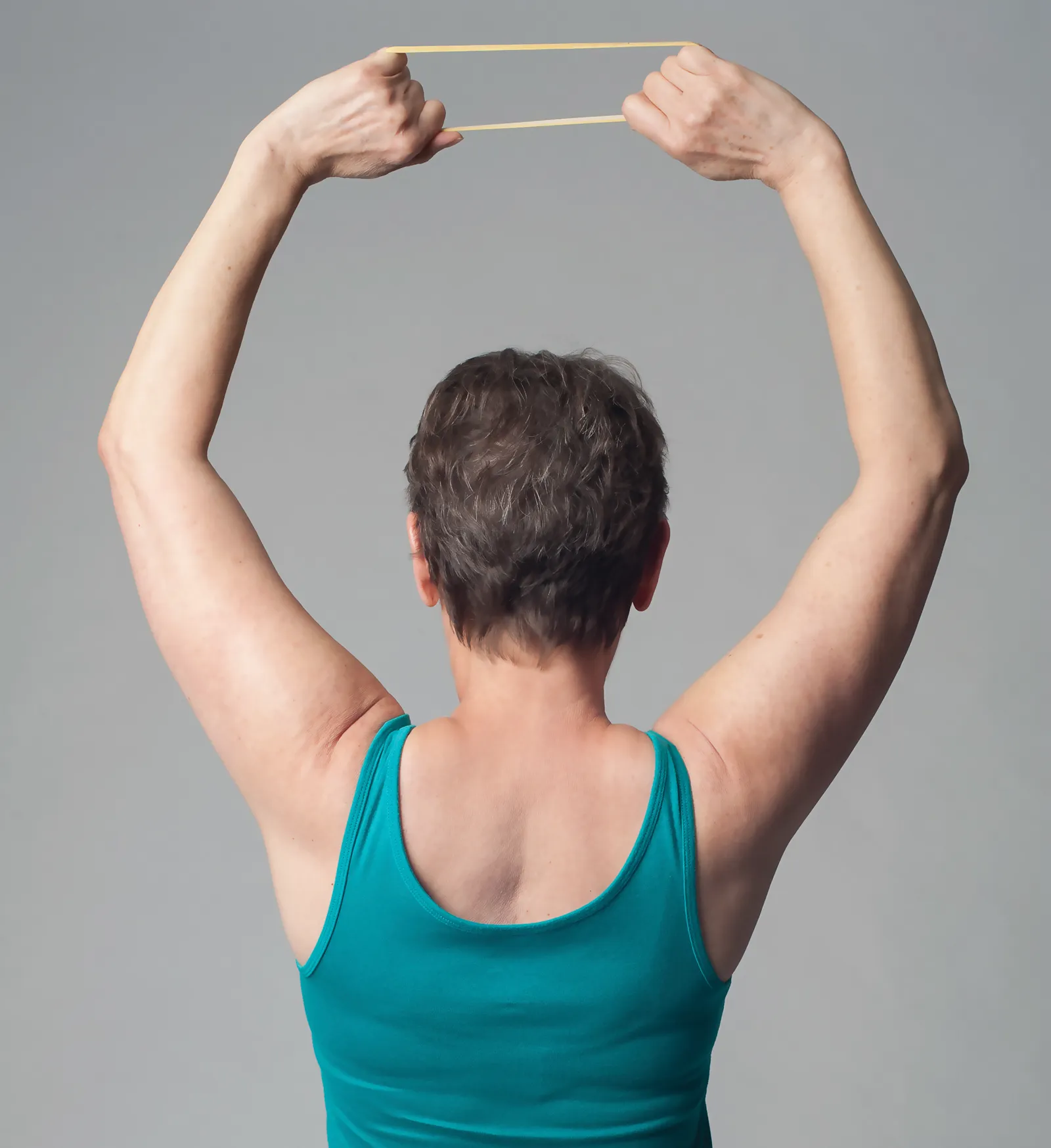
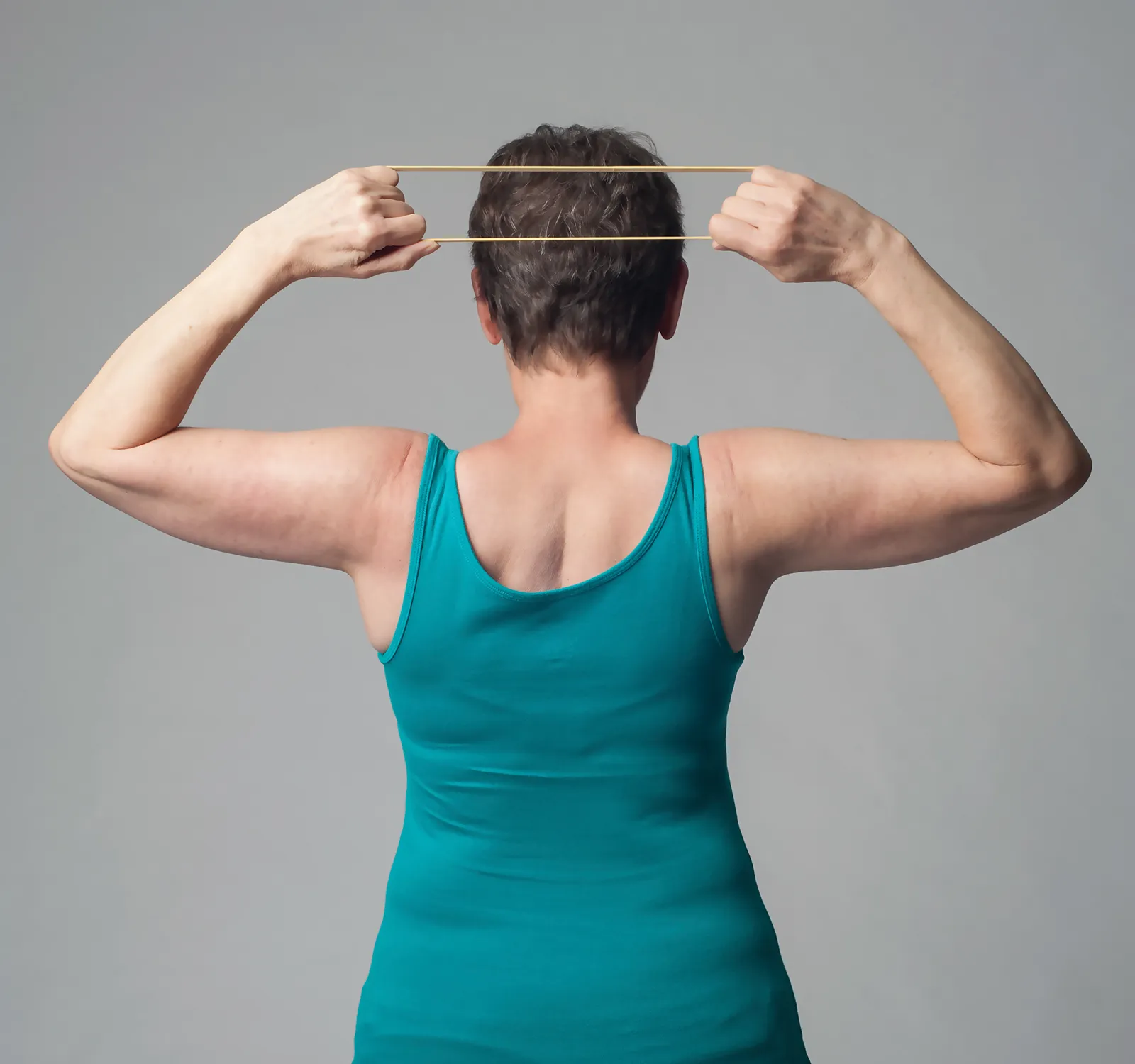
Primary muscles worked: middle and lower trapezius, rhomboids, latissimus dorsi. This exercise has the added benefit of stretching the internal rotators, especially the pectoralis major.
Start with one set of 10 repetitions, and gradually increase to three sets of 10. Doing just three repetitions will bring the torso into alignment with the pelvis. Everyone should keep a resistance band by the computer, and every massage therapist should do a few pull downs between clients.
Errors to Avoid
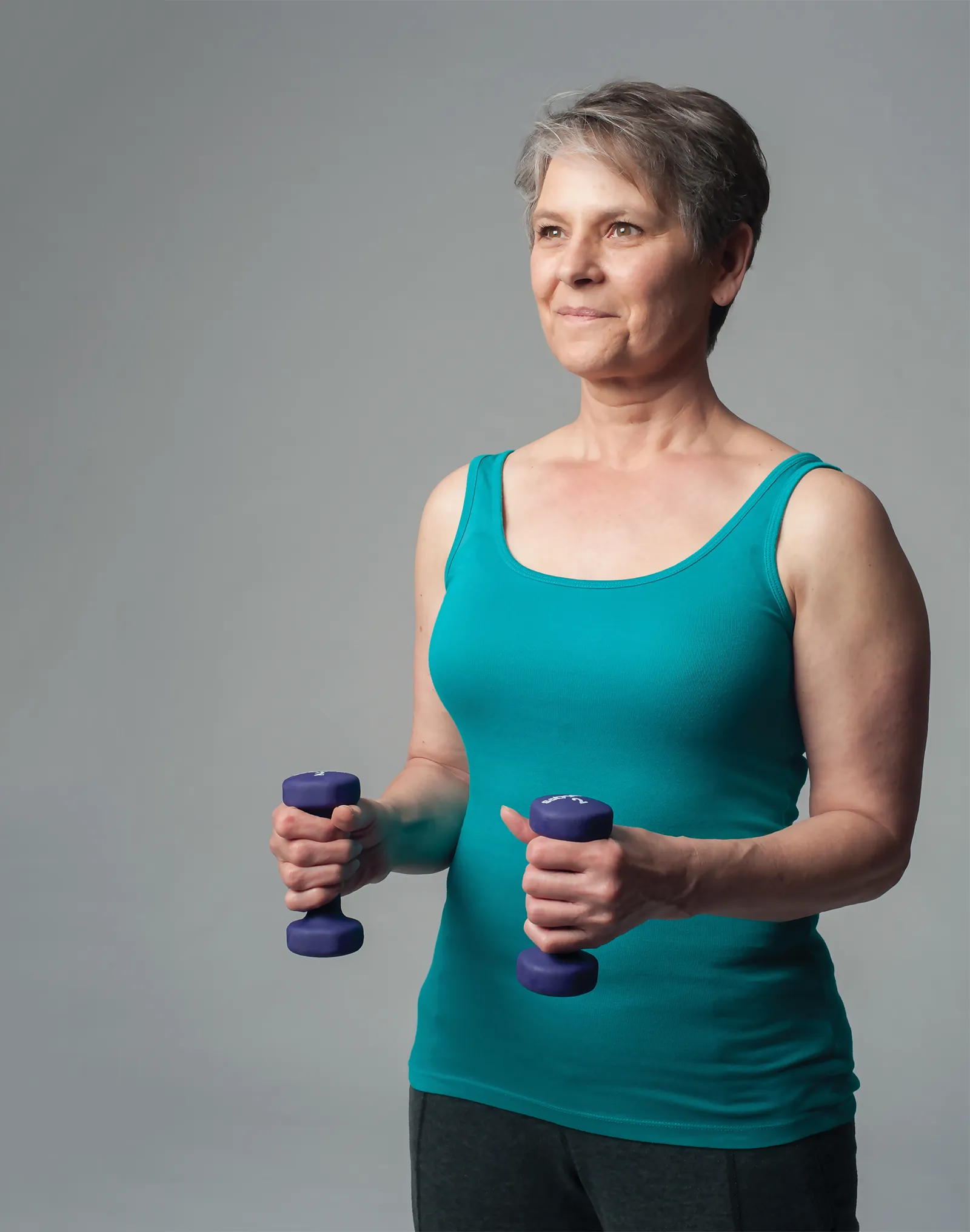
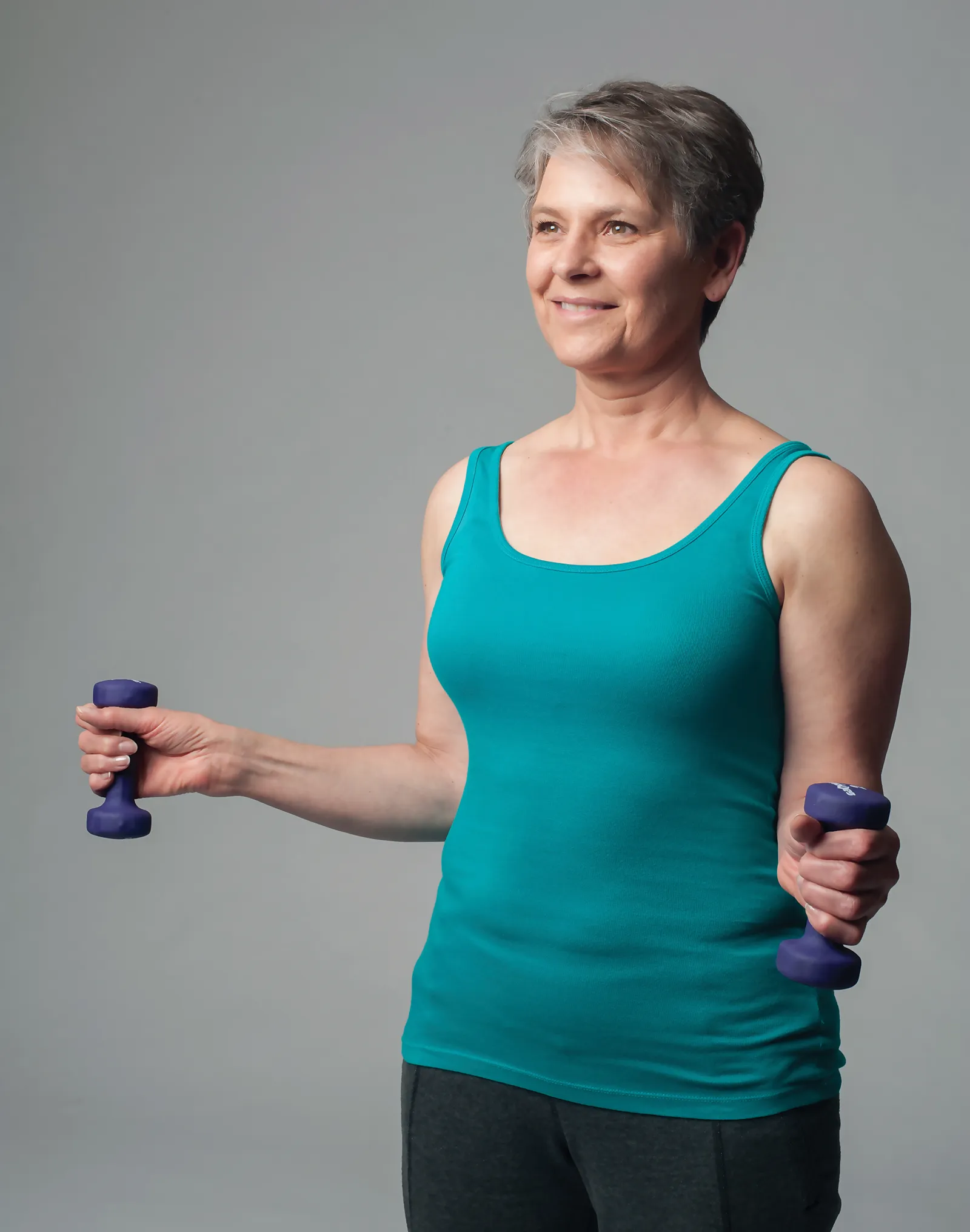
Primary muscles worked: infraspinatus and teres minor.
The return motion provides eccentric strengthening. Most injuries to these muscles occur from eccentric overload, so gradual strengthening on the return is a good preventive exercise. Start with one set of 10 repetitions, and gradually increase to three sets of 10.
Errors to Avoid
Use this self-care technique to generate a state of calm alertness.
Use this cord-cutting exercise to reclaim your energy and restore your vitality.
Sound healing can be easy to incorporate into your practice and into your daily self-care routine.
It’s easy for us to get stuck in our work—physically, mentally, emotionally. Let’s look beyond the usual self-care routines to find better ways to get unstuck and back to the work you love.