


Strengthen Your Vagal Tone
Use this self-care technique to generate a state of calm alertness.
Wellness is difficult to define, but can be simply described as the state of being comfortable, healthy, and happy while making daily choices that lead to more self-fulfillment, meaning, and success.
Wellness is as much a state of mind and spirit as it is a state of body. It requires a balance between work time and playtime, solid interpersonal relationships, and strong emotional coping resources. Meaningful work, family activities, social interaction, and personal interests help life feel purposeful and enjoyable. Wellness requires good choices and some effort. People seeking wellness eat a healthy diet but allow themselves to splurge once in a while. They get regular sleep and take steps to manage stress, nurture relationships, pursue personal interests, and remain open and positive about life’s ups and downs.
Many people use wellness models to help them focus on areas of life that feel out of balance. A wellness model is a chart, document, or program that offers basic criteria for optimum function in specific life areas and provides questions that help people explore wellness in their own lives. Sometimes, health-care practitioners use a wellness model as part of their assessment and goal-setting procedures with clients/patients. Many destination spas have moved toward an integrated wellness approach. Clients receive consultations that include the development of an ongoing wellness plan. Wellness plans outline useful activities, seminars, or treatments the client might seek out.
Administering a wellness model in a private massage practice is not appropriate, as such advice falls outside massage therapy’s scope of practice. However, massage is likely to be included in a client’s wellness plan from another provider, so therapists should be versed in wellness concepts and be able to work in conjunction with other health professionals to support the client’s wellness goals.
The wellness components and wellness planning tools described here will help you broaden your understanding of the benefits and role of massage. An integrated wellness model can also prove to be a useful tool in your personal self-care routine, thereby supporting massage career longevity.
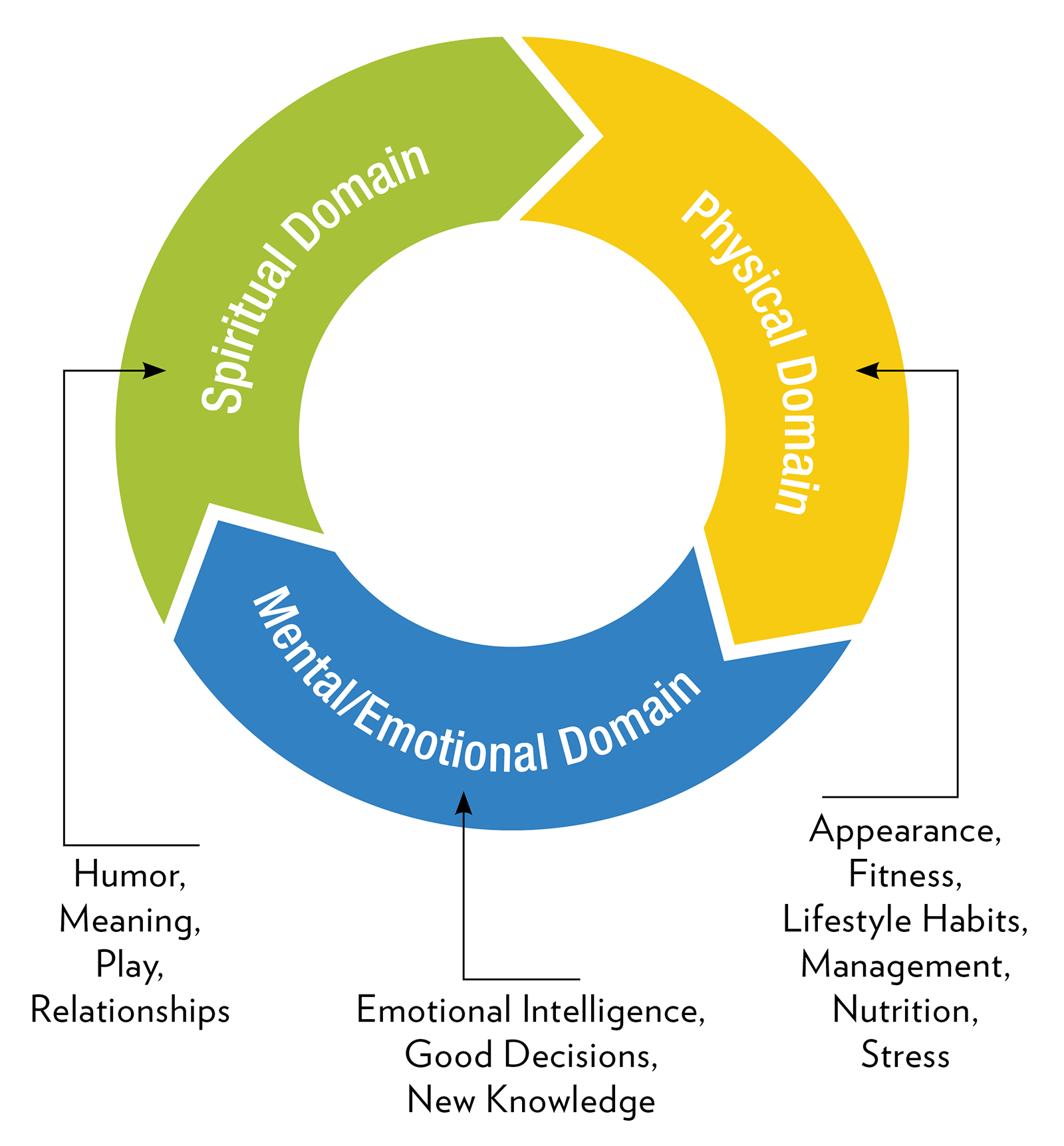
Each wellness model may be slightly different, but all usually address three main areas of health: physical, mental, and spiritual (see graphic at right). As a person contemplates what he needs in life, the wellness model adapts to include areas he views as important.
There is no fixed way to develop a wellness model. Each person, and therefore each model, will be different. Questions are developed around each wellness area and the answers are used to inventory a person’s current state of wellness. When people have insight into the state of their wellness, they can set goals to improve areas they feel motivated to change. The following section breaks wellness into six key areas, and provides questions for exploration.
The health and fitness of the physical body are important to wellness. Some strategies to explore in this category are exercise, nutrition, relaxation, and sleep. Sample questions include:

Challenges, creative expression, curiosity, intellectual growth, and a positive self-concept are important parts of a person’s overall well-being. Self-concept or self-esteem is a belief about oneself that enhances coping skills and leads to good feelings about oneself and the ability to impact others in a positive way. Sample questions related to intellectual wellness might include:
Emotional wellness explores the awareness and acceptance of one’s feelings. It looks at how we assess our emotions and moods to gather information used to meet important life goals and overcome personal limitations. Sample questions for exploring emotional wellness might include:
Spiritual wellness refers to each person’s search for meaning and purpose in life. It explores the ability to find beauty in everyday events, to feel comfort and hope even when things are not going well, to express compassion and caring toward others, and the ends to which we devote our time and energy. Sample questions for exploring spiritual wellness might include:
Occupational wellness is concerned with finding personal satisfaction and enrichment through one’s work. When people can use their talents and interests to contribute to society through their work, that work tends to feel more enjoyable, fulfilling, and meaningful. Sample questions for exploring occupational wellness might include:
The ability to build and keep supportive and satisfying relationships is an essential element of wellness. Social wellness also requires exploring your interaction with your local and global community, because being an active participant in society can enrich life and provide purpose and meaning. Sample questions for exploring social wellness might include:
A wellness model and personal wellness inventory are used to create a wellness plan in which specific goals and action steps lead to greater equilibrium. To create a wellness plan, identify the area you are most motivated to change. You might keep track of your progress in a wellness journal or through the coaching of a health-care professional. At predetermined dates, progress on the plan should be evaluated and the plan revised and updated.
Use this self-care technique to generate a state of calm alertness.
Use this cord-cutting exercise to reclaim your energy and restore your vitality.
Sound healing can be easy to incorporate into your practice and into your daily self-care routine.
It’s easy for us to get stuck in our work—physically, mentally, emotionally. Let’s look beyond the usual self-care routines to find better ways to get unstuck and back to the work you love.