Ergonomics is a topic that’s crucial to your career longevity. Once you explore the concepts below, your body can approach its tasks with harmonious, well-aligned movements. You can enjoy having your client and tools placed in an equally harmonious relationship with the body’s planes of movement—minimizing stressful actions and making every day a little easier.
Most people think of ergonomics in terms of correct placement of chairs, tables, and other work equipment to better fit the user, improve productivity, and increase safety. These are important aspects of ergonomics, to be sure, but they are only half the picture. Arranging your furniture correctly is an external solution; we must also pay attention to ergonomics from the inside out, placing more importance on true body awareness.
Mastering this ever-present awareness—an understanding of being in the body—is key to finding comfort and ease in all our daily tasks. Each of us has an individual somatic, or bodily, sense of being in the world. While all of us know this sense of embodiment, the individual experience is unique, based on how we come to know the abilities and movement habits of our own body.
Four Physical Systems of Support
Most of us feel a sense of familiarity with how our muscles move and work, but have less sense of the three other physical systems that are essential to our movement patterns: the skeleton, organs, and fluids within the body. Fluids support our internal organs, organs support the skeleton, and the skeleton supports the muscles. Each of these physical systems interacts with all the others.
Shutterstock.
Horizontal and Vertical Planes
Along with an awareness of the body’s structure, the integration of better body mechanics into daily tasks is best achieved by understanding the planes through which we move. Actions like holding, lifting, pulling, pushing, and reaching are carried out in the vertical plane. Actions like twisting at the waist or turning the head are carried out in the horizontal plane.
The body’s base horizontal plane, and the anatomical cornerstone for correct vertical support of the spine and torso, is the pelvic floor. This soft but sturdy diamond-shaped structure is comprised of several muscles in the space between the deep bones of the buttocks, tailbone, and pubis. Whether sitting or standing, consciously thinking of this area as your body’s base of support will lengthen the lower back, center the torso, align the spinal curves, and create a sense of being uplifted.
An even deeper sense of support is created when one foot is placed in front of the other while standing (making sure the knees are not locked), or lifted up and placed on a footstool or low bar when sitting.
Tension
Shutterstock.
The next step in deepening your sense of correct ergonomics is a clearer understanding of tension. In the simplest terms, we can think of tension as held weight. Ideally, the weight of our body is supported by three major weight-bearing centers of the skeleton: the pelvis, the ribcage, and the head’s position as it balances on the neck. These are also the areas of the body where we find the primary horizontal planes for the body’s various rotating or twisting movements.
Tension occurs when muscles exert effort to hold weight in a fixed manner away from these three natural weight-bearing centers. When this muscle effort is sustained over a period of time, tension patterns develop and deepen with repetition.
Tension is released when we correct our posture or adjust movements to drop our weight back onto the weight-bearing centers.
Correct Ergonomic Choices
Shutterstock.
Understanding the above principles and becoming aware of them in your own body and daily tasks will mean correct ergonomic choices are always within reach. Maintaining good body mechanics is a daily journey; practice repeatedly until good patterns become habitual.
Examples
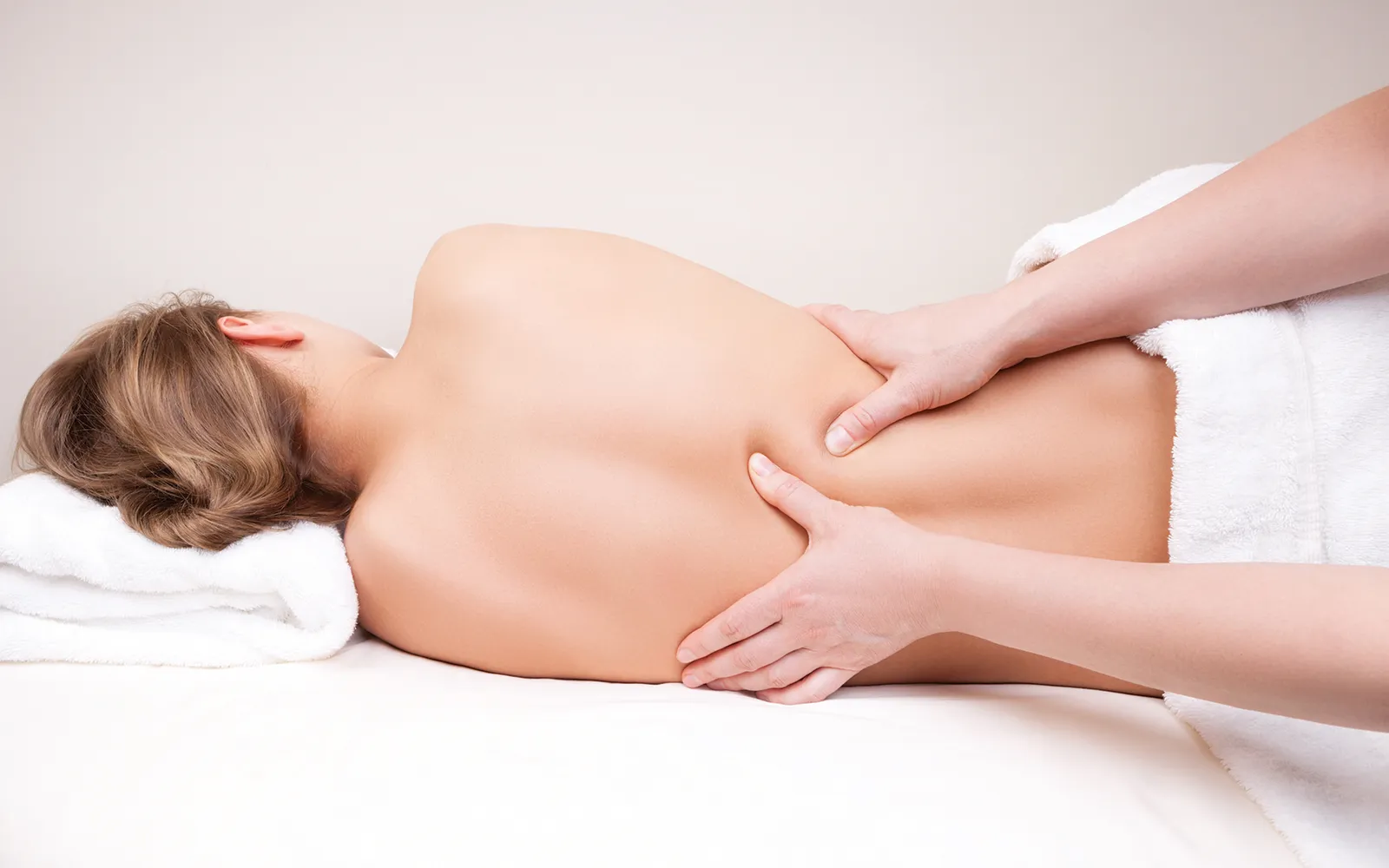
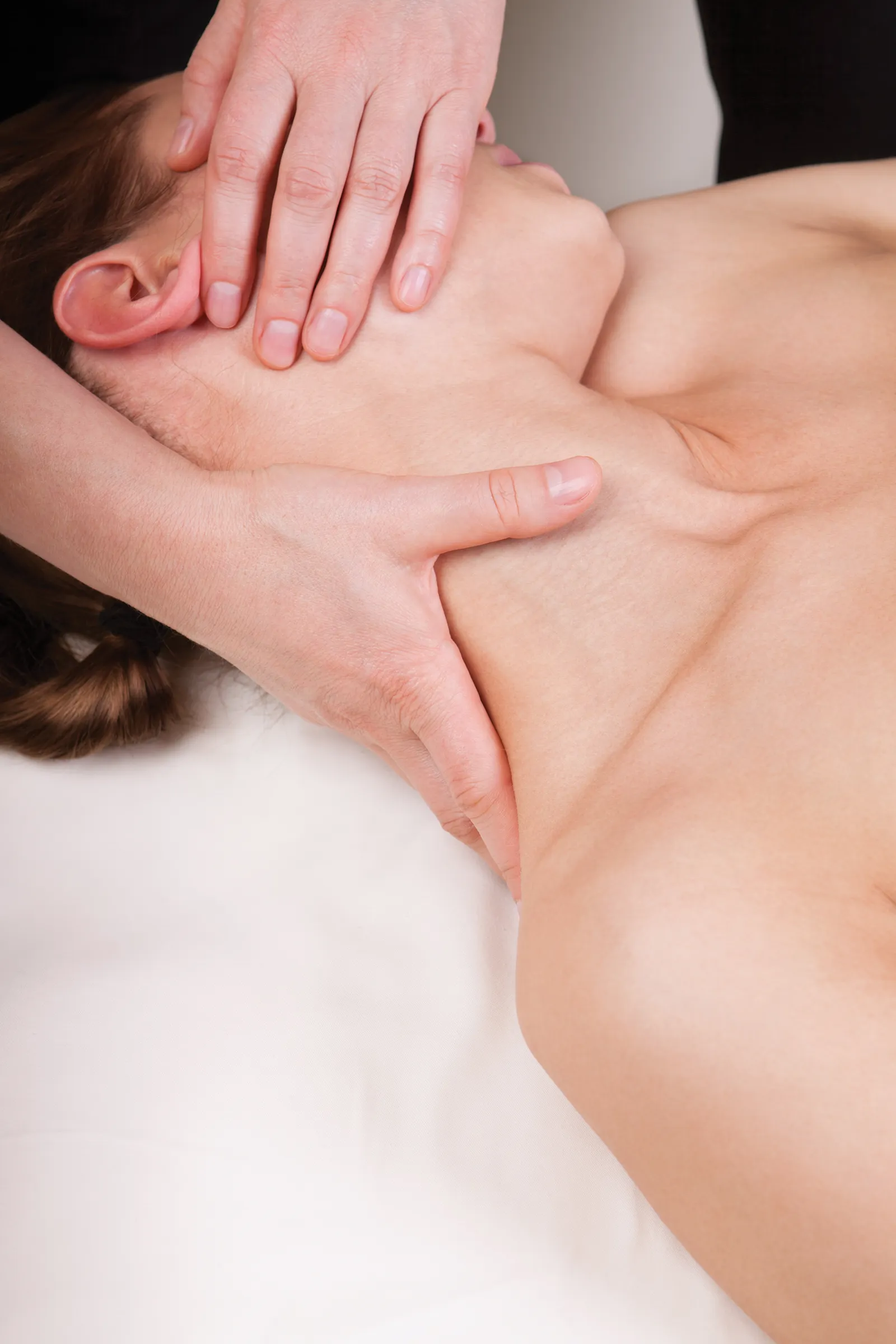
The trapezius muscles are often held in a tense, half-shrug position when holding tools or equipment over a client. For a more efficient way of holding, allow the shoulder blades to drop. Soften the muscles and release weight down the ribcage into the skeleton for support.
Turning and reaching for products or tools causes unnecessary strain over time. Place items close at hand whenever possible. A trolley or small side table is useful.
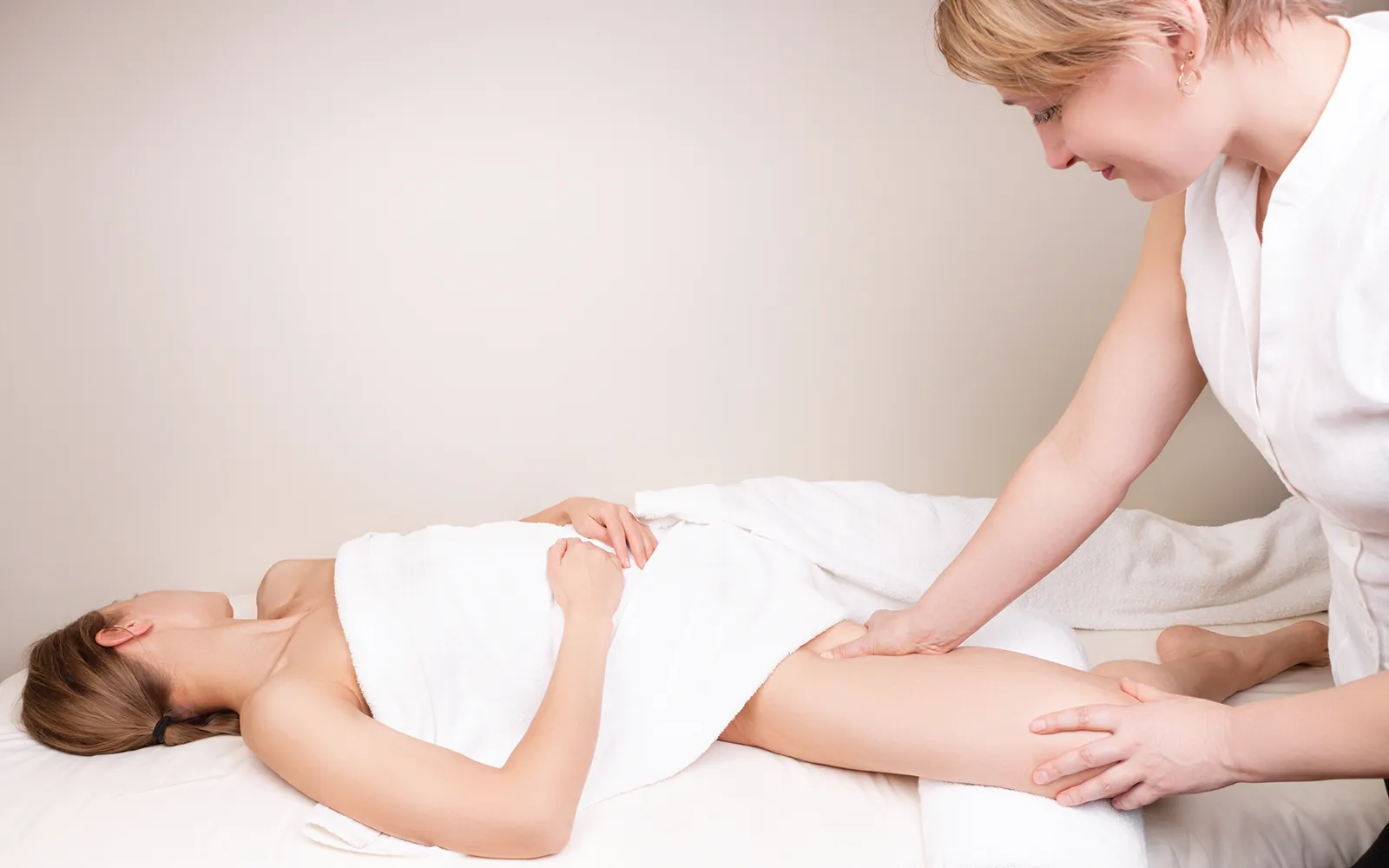
Many estheticians perform a shoulder massage in a hunched-over position, locking arms at the elbows. It’s more effective to position the chair close to the client so you are not reaching with elbows locked. Align your spine by putting weight on your sit bones with no back curvature, shoulders back and down, and the abdominal muscles engaged.
To understand tissue-tension barriers, MTs must be constantly present and mindful. Too light and we will not become efficient at creating the healing change that is needed.