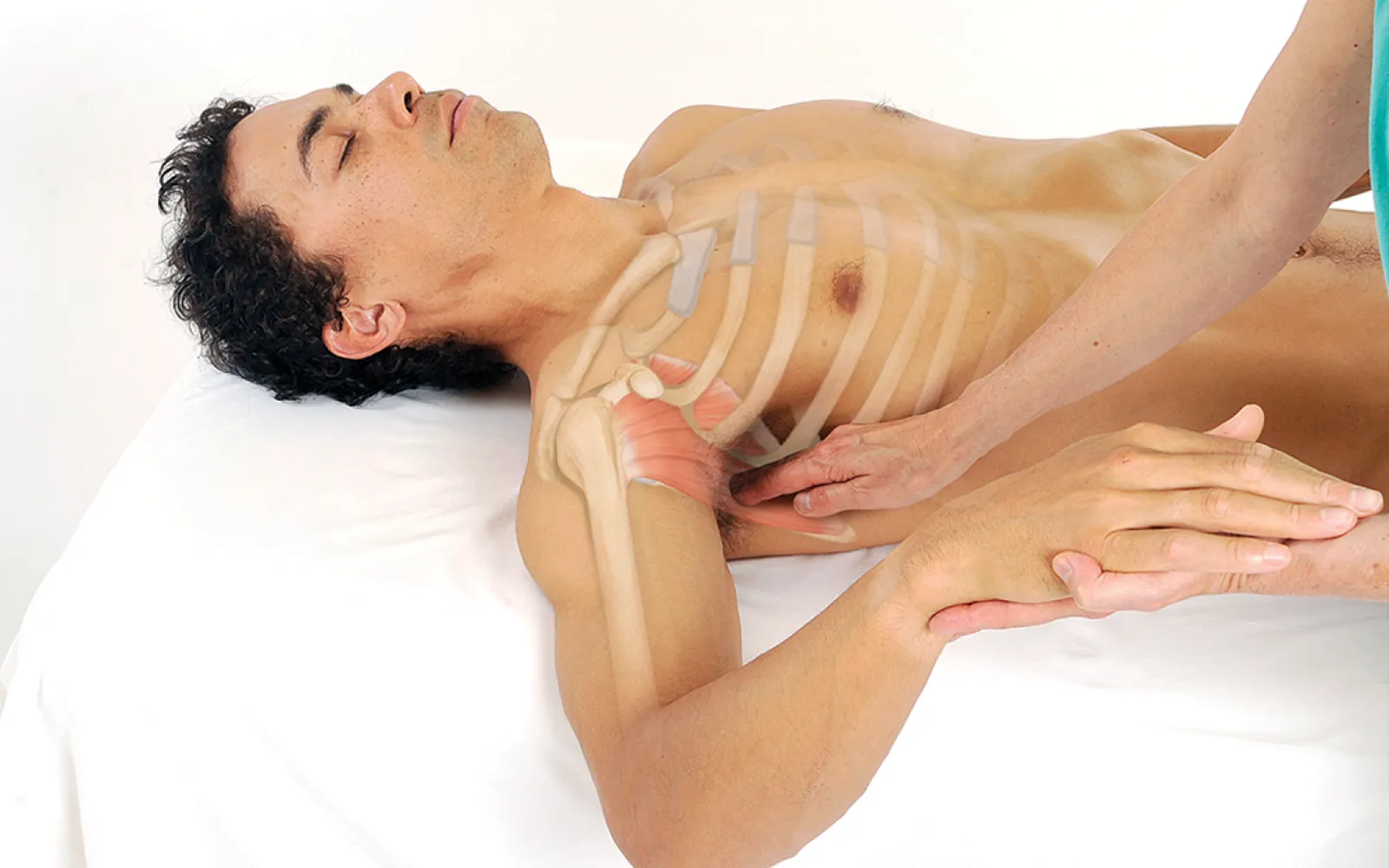
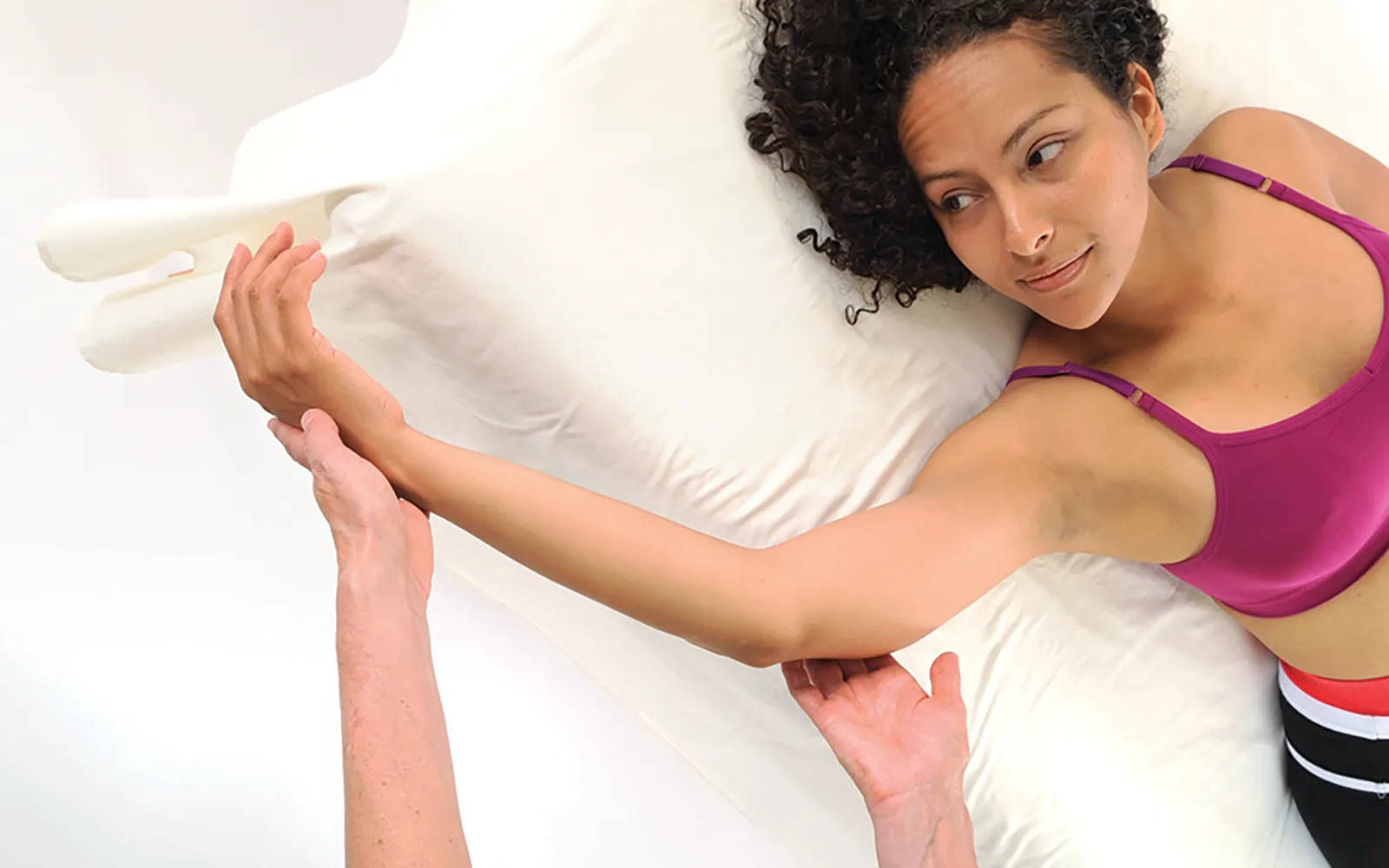
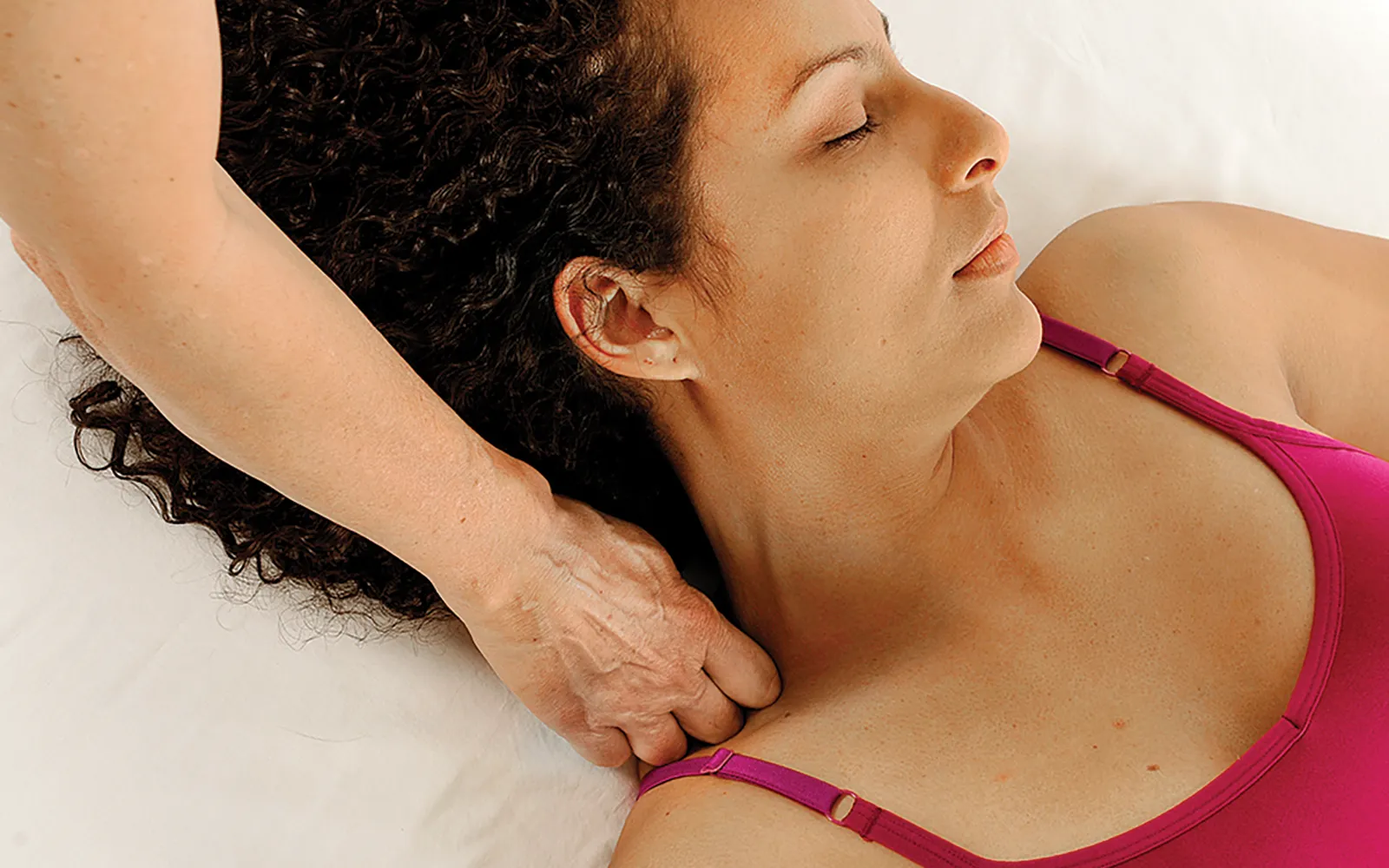
Clients often ask what they can do to prolong the positive effects of massage, especially those changes that alleviate pain and improve posture. For these clients, we can use active techniques—any hands-on bodywork method that requires a client’s active participation.
Active techniques can range from having a client breathe a certain way, to focusing on relaxing a specific muscle, to guiding the client through a range of motion. In a widely used active technique called postisometric relaxation (PIR), for example, we have the client contract against resistance before stretching a muscle. The resisted contraction triggers a PIR response, which enhances the subsequent stretch.
Every time we use an active technique, we have the opportunity to help clients gain better control over their muscle-use patterns, become aware of patterns that cause pain, and establish more efficient patterns that they can reinforce by practicing on their own.
What Is a Neuromuscular Pattern?
A neuromuscular pattern is a sequence of muscular contractions that results in a specific movement. These patterns are stored in the brain’s motor cortex. The more a pattern is used, the stronger it becomes, due to the myelination of the motor nerves used in that pattern. This is why habitual patterns of posture and movement are often difficult to change.
Neuromuscular patterns are under the control of the client. Without the client’s active participation, no amount of bodywork can change these patterns. For example, during a bodywork session, you can help a client release chronic muscle tension by having him lightly contract the affected muscle and then actively relax it. But to transform this temporary release into a new neuromuscular pattern, the client needs to learn to consciously release his old pattern and replace it with a new pattern. He also needs to strengthen the new pattern through practice, so take him through at least three repetitions of a new pattern. Also encourage him to practice on his own.
Active Movements and Verbal Cues
Helping clients change neuromuscular patterns often involves having them move slowly enough to become aware of where in the chain of action the faulty muscular response occurs. To help a client become aware of the exact source of the muscular tension causing restricted neck motion and pain, for example, have her slowly and consciously turn her head from side to side using minimal effort while you assist the motion.
You can provide hands-on assistance to movement in several ways: explore holding areas where the client is overworking to encourage relaxation, guide small motions (such as a pelvic tilt) along more efficient pathways, and gently stretch restricted areas to increase range of motion.
Verbal cues provide another avenue for your clients to gain awareness of old and new patterns during a session. Use simple and direct wording, similar to these examples:
To improve economy of movement: “Do this movement using the least amount of effort possible.”
When a client is overworking: “Use one-tenth of the muscular effort you were using before.”
To improve symmetry of motion: “Move both arms together and focus on moving with greater symmetry.”
To engage muscles that provide core support and stabilization: “As I press down on your sacrum to stretch your lower back, lightly contract your lower abdominals.”
To reinforce a new pattern: “Take a moment to notice what this process feels like so you can practice it later.” These are just a few ways to engage your clients’ active participation in improving their body patterns. As you integrate active technique with neuromuscular patterning, keep in mind that you’ll need knowledge of joint structures and functions so that you can safely nudge faulty movements toward a normal physiological range.
To understand tissue-tension barriers, MTs must be constantly present and mindful. Too light and we will not become efficient at creating the healing change that is needed.