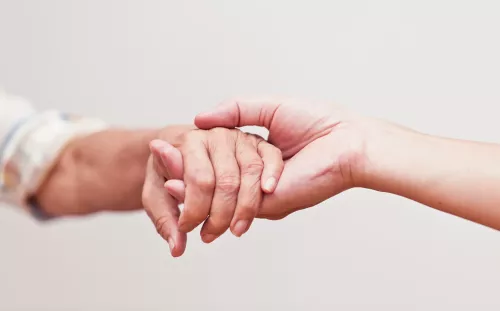
"You have been a light in the most difficult time of our lives." These words were said to one of my students by the grateful family of a hospice patient whom she had cared for.
"Her smiles, when you were touching her, were so heartwarming. Thanks again."
Yes, the gratitude from patients and their families has been the biggest reward of working with hospice patients ever since 1989, when I offered massage to my first terminally ill patient. The hospice philosophy of palliative care, through medical, spiritual, and complementary care, seemed the perfect fit for me. In an era when the focus of massage education and practice was shifting from intuitive and nurturing touch toward more emphasis on assessment and treatment protocols, I discovered that offering the benefits of touch to the most vulnerable of people—those at the end of their lives—countered that trend.
I have often been asked, "Isn't it difficult to work with people who are so fragile? How do you know what to do? How do you protect yourself emotionally?" It can be difficult. Yet, I welcomed the opportunities that came my way to work with this special population. I learned to let go of judgments and to trust in the power of touch offered lovingly without expectation of results. Caring doesn't necessarily mean "fixing" anyone. Rather, it means being present, acknowledging the wholeness of the person you are touching, no matter their circumstances.
Compassion is the ability to be present with another human being who may be in physical, emotional, or spiritual pain.
iStock.
With the clear intention to offer comfort comes the awareness that you, the practitioner, also need to be grounded in your own body. Most hospice patients and frail elders are either in their homes or in medical settings, so you need to adapt your body patterning. Your physical comfort is integral to the quality of touch you give. Take advantage of the chance to sit as you work. It is OK to work primarily where you have the easiest access; for example, the hands and feet. Simplicity is a beautiful thing.
Remember to slow down. Notice your own breath, letting it be full and deep. With the clear intention to comfort, you convey a respectful attitude toward the person you are touching. You can safely touch even the frailest person by using broad, encompassing contact pressure.
Allow your touch to sink slowly into the part of the body you are touching.
We can offer our skills, while keeping an open and curious mind to learn in the moment. Compassion is the ability to be present with another human being who may be in physical, emotional, or spiritual pain. Rather than fall into the pit of sympathy, we can reach out with our touch and loving awareness, and allow the person to experience the comfort and pleasure of nurturing touch. What could be better than that?
To understand tissue-tension barriers, MTs must be constantly present and mindful. Too light and we will not become efficient at creating the healing change that is needed.