

Fascia: The Pericardium-Diaphragm Connection
Understanding how the pericardium relates to breathing can in turn help clients relax into their massage session.
The rectus femoris bisects the front of the thigh between the sartorius and tensor fasciae latae. It is one of four quadriceps muscles, but the only one that crosses the hip joint and the most superficial of the four. The fibers of the rectus femoris are feather-shaped or bipennate. Muscle fibers on each side attach obliquely to a central tendon. This configuration accommodates a higher number of muscle fibers in a given area compared to parallel fiber arrangements, thus increasing potential force production. The fiber configuration is a clue to this muscle’s function as a prime mover for hip flexion and knee extension.
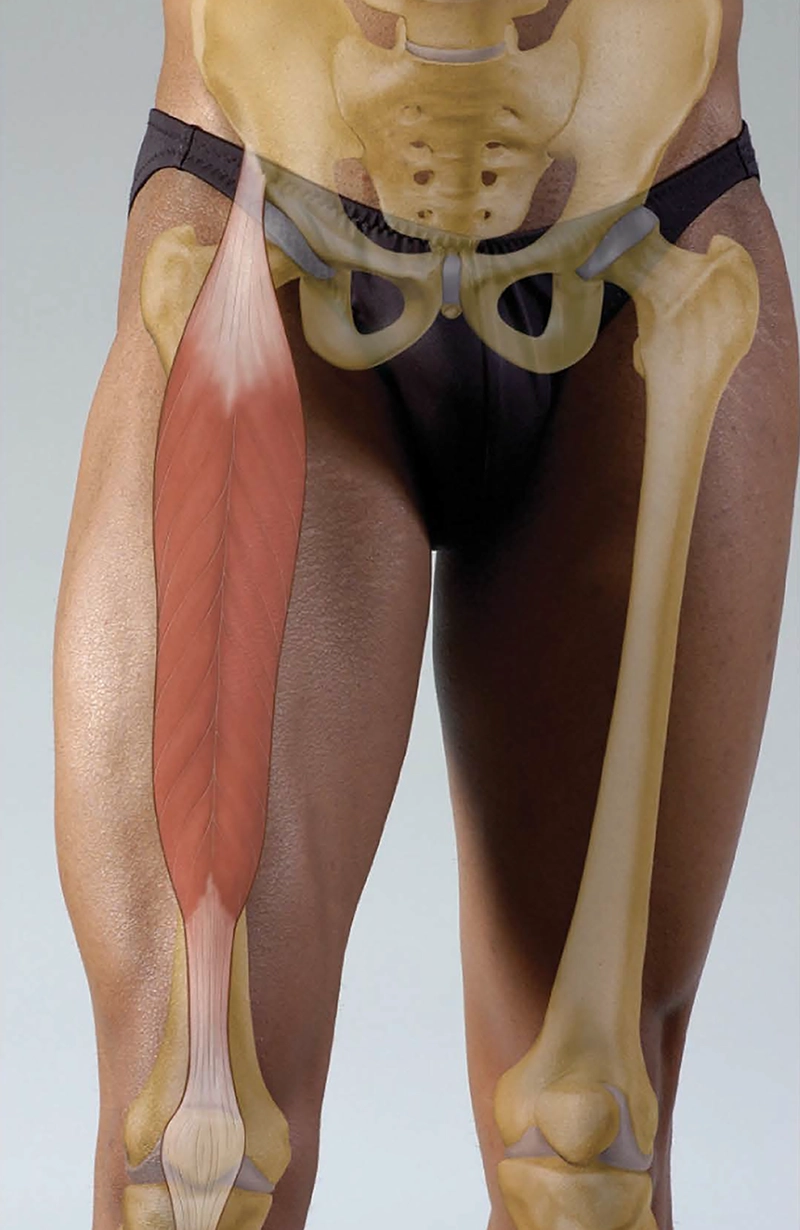
Functionally, the rectus femoris pulls the femur forward at the hip while kicking out the lower leg during the swing phase of gait. This places the heel of the swinging leg in position to contact the ground and accept the weight of the body during the stance phase. This two-joint motion is also used in activities such as flutter kicks for swimming or kicking a ball forward. At the hip, the rectus femoris assists muscles like the psoas, iliacus, sartorius, and tensor fasciae latae in flexion. Because of its origin at the anterior inferior iliac spine, the rectus femoris also has some ability to tilt the pelvis anteriorly.
The rectus femoris, vastus lateralis, vastus intermedius, and vastus medialis form the quadriceps group and together straighten the knee during standing and lifting with the legs. All three vastus muscles are much more powerful than the rectus femoris in this action. The strength of the vastus muscles is generated by their large cross-sectional area, increased leverage created by the patella, and single purpose of extending the knee.
Tightness in the rectus femoris is common and may lead to excessive anterior pelvic tilt, poor patellar tracking, or both. Tension from the rectus femoris tends to pull the anterior ilium forward and downward toward the femur, resulting in increased anterior pelvic tilt and an associated increase in lumbar lordosis. At the knee, excessive tension in the rectus femoris presses the articular surface or underside of the patella into the femoral groove. Prolonged compression at the patellofemoral joint prompts inflammatory responses, pain with activity, and eventually wears away the articular cartilage, causing chronic knee problems like osteoarthritis. Maintaining adequate flexibility in the rectus femoris can help prevent these types of postural and mechanical dysfunctions and associated chronic conditions.
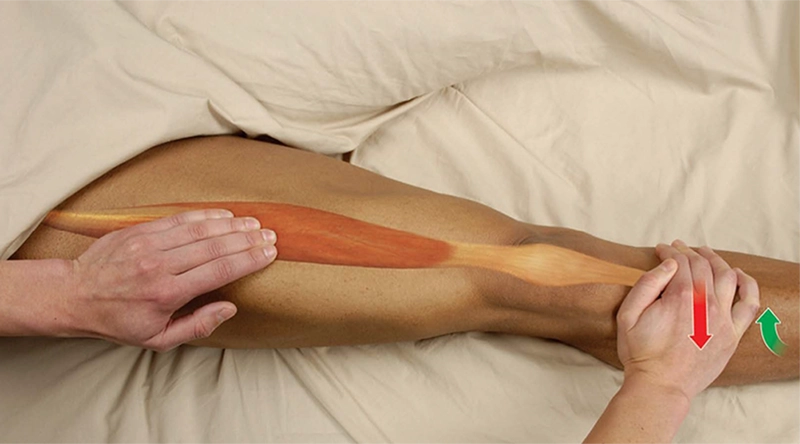
Positioning: client lies in a supine position.
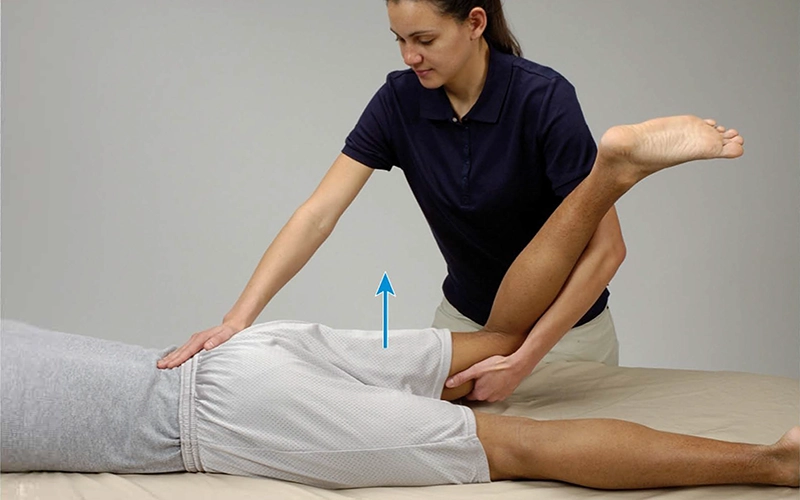
Positioning: client lies flat in a prone position with legs together.
Understanding how the pericardium relates to breathing can in turn help clients relax into their massage session.
Superficial fascia may not get the same attention as deep fascia, but it plays an extremely important role in the organization of tissues and the structure of the body.
Understanding tendons—their shapes, lengths, and organization—improves an MT’s touch vocabulary and facilitates a more skilled touch.
While the neck is a bridge, a pathway, the position of the neck and head can also indicate a multitude of other things happening beneath the surface.