Why do we spend so much time in massage and bodywork trainings learning anatomy and physiology?
While it might seem like a silly question, "So we know which muscles we are working on and why" is only one piece of the answer. What about our clients? Shouldn't they understand their bodies just as well as we do? Is our educated work alone enough to cause lasting results?
Perhaps in a few cases, yes. But, in most cases, each individual who finds their way to our tables carries more power to heal themselves than we do. This extends our role from practitioner to educator.
How Did You Learn?
Ask yourself, by which method(s) did you most effectively learn anatomy and physiology? Could you have learned the structure and function of the body by verbal description alone? Likely not. It's probable that your instructor used pictures, skeletons, and charts combined with palpation and movement so you could feel and experience what you were learning. With your clients, the same methods can be profoundly effective in helping them address their pain.
You, The Educator
Weaving an educational component into your sessions can be highly effective. Small teachings can make a big difference. Below are three steps for using imagery to support the unwinding of dysfunctional patterns in clients and achieve, as a result, less pain and more happiness.
Step 1: Introduce Big-Picture Anatomy
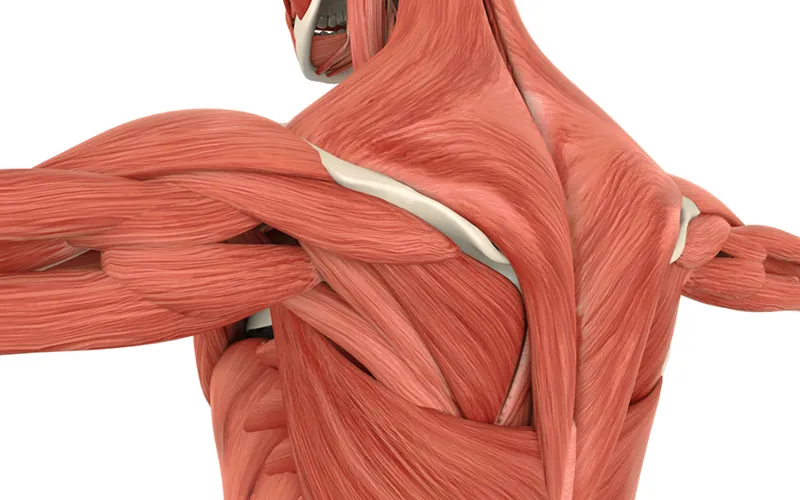
Clients can easily tell you where it hurts. They don't necessarily understand the domino effect to both nearby and distant structures. When they see an image of the muscles that are present at their reported point of pain and are offered context for how they function with nearby muscles, they can tune in and support healthy function.
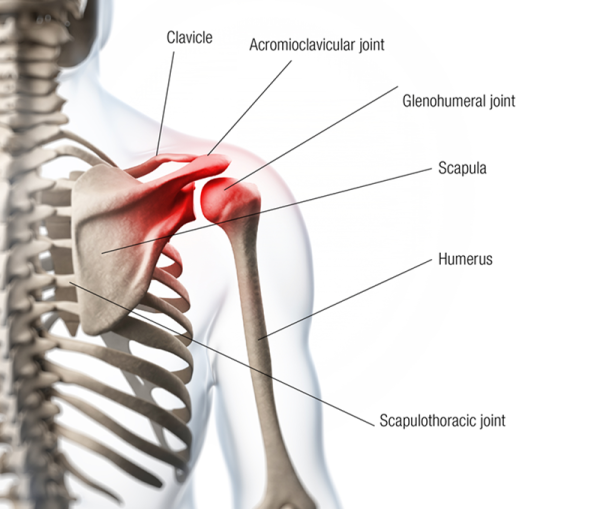
Let's take the scapula, for example. Many complaints arise from reduced mobility in the scapulothoracic joint, such as the common "spot-inside-my-shoulder-blade" problem. You could show a client with this pain the pec minor, rhomboid, mid-to-lower trapezius, and serratus anterior, for example, explaining how they interact with each other to affect the movement of the scapula and posture. Even if clients don't remember the details, they can begin to understand the bigger picture. My clients frequently comment on the value of this approach.
Show your client a picture of the bones first, then the muscles that surround the bones holding the joint in place. Highlight how joints are surrounded on all sides.
Online programs such as Primal Pictures, textbooks with clear and colored pictures, muscle charts, and trigger-point charts are perfect tools for educating clients. If you want to step it up a notch, purchase small skeleton, spine, or joint models. Investing in a shoulder joint model is useful for demonstrating function for an array of common complaints.
Step 2: Direct the Senses to the Area
Direct your client to touch and engage the area you are teaching them about while holding the image they just learned in their mind. If a client touches their pec minor with a picture of it in mind, the brain will direct a signal down the pathway to the pec minor. Just this simple amount of attention can begin altering how the muscle functions and can promote the healing process.
Next, have your client move in the range of motion of that muscle and/or related muscles. Seeing, feeling, and now moving the area will create profound effects. Commonly, pain resides in an area that is otherwise ignored, thus the reason for pain. Pain is the body's SOS signal. Yet, far too often the call for help is ignored. Directing the senses to an area of pain causes a near-immediate reduction in its intensity.
Step 3: Visualize the Outcome
Instruct clients to practice visualizing and moving the structures you have taught them about, imagining the desired outcome, for 10-20 minutes per day. Ask them to keep a short daily log of any changes they experience so you can chart progress.
For quite some time, athletes have used visualization techniques to improve athletic performance, with great success. Studies in brain patterns show that the same patterns that activate while performing a physical activity are activated when simply envisioning the activity without actually performing it. Combining images of anatomical structures with a visualization practice of altering the structures (such as softening a muscle, releasing a trigger point, or improving blood and lymphatic flow to an ischemic area) can be powerful for the healing process. I have personally engaged in this process with amazing results.
Educating is Learning
Not only will this approach assist your clients' body awareness and healing, it will also help you practice and hone your anatomy, physiology, and kinesiology knowledge. Any teacher will tell you that teaching others fills in knowledge gaps, even when you think you have it dialed in.
Especially if you are straight out of school, this approach will continue your education each and every day you are working on clients.
But don't take my word for it. Try it with your clients and for your own aches and pains. Be sure to chart your progress so you can see the lasting results.
To understand tissue-tension barriers, MTs must be constantly present and mindful. Too light and we will not become efficient at creating the healing change that is needed.