

Fascia: The Pericardium-Diaphragm Connection
Understanding how the pericardium relates to breathing can in turn help clients relax into their massage session.
The adductor magnus is the largest adductor muscle of the thigh. Along with several other adductor muscles, the adductor magnus connects the inferior, medial pelvic girdle to the femur. The broad fibers of the adductor magnus are nearly continuous, following the entire length of the femur, attaching on the medial edge of the linea aspera. Despite its large size, the adductor magnus is located deep in the medial thigh, making it a challenge to palpate. Anteriorly, it lies deep to the pectineus, adductor longus, and adductor brevis. Posteriorly, the adductor magnus lies deep to the hamstring muscles, but is superficial at the proximal portion of the posteromedial thigh.
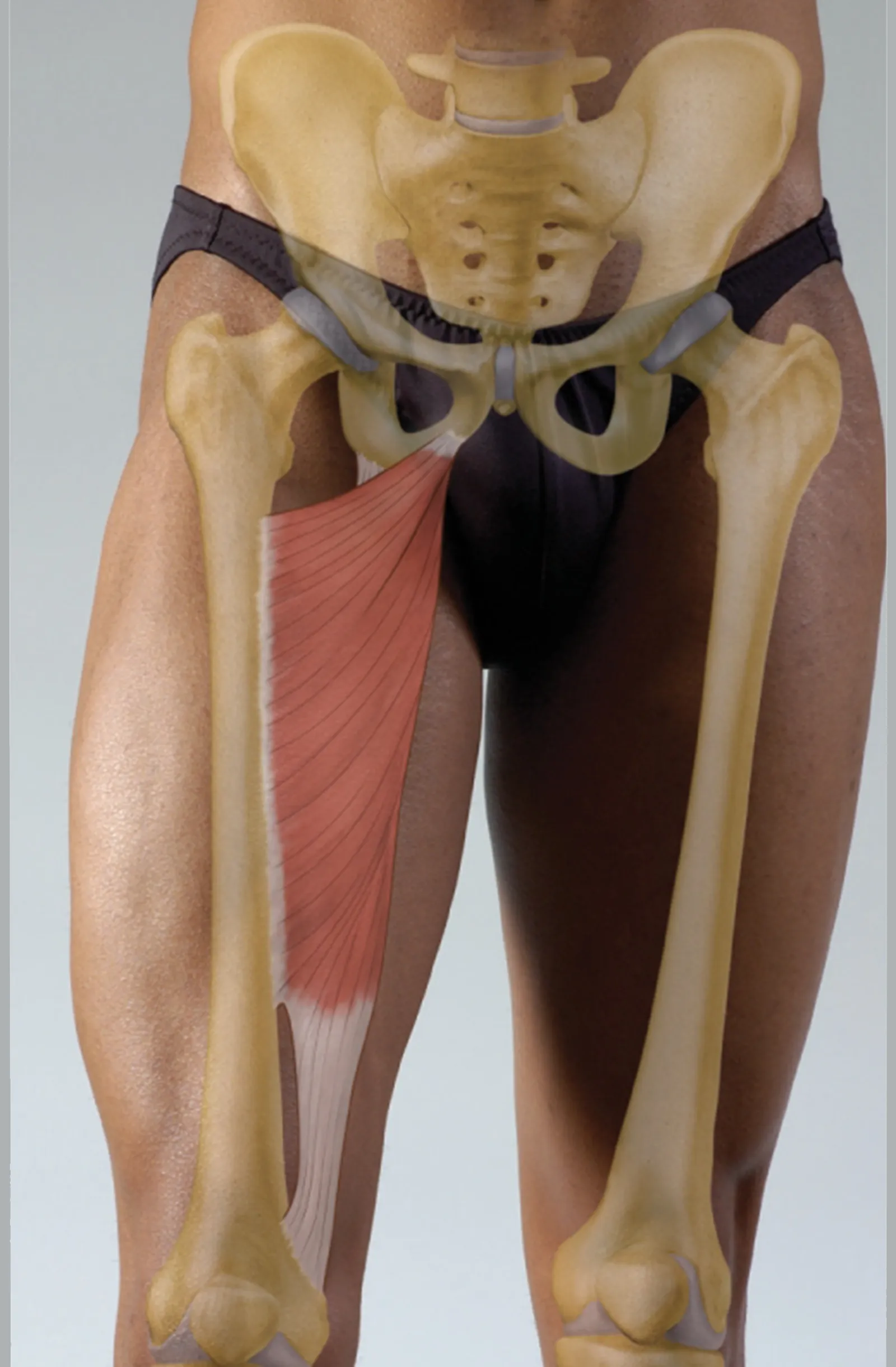
Functionally, the adductor magnus joins the pectineus, adductor brevis, adductor longus, and gracilis in pulling the femur toward the midline. This is most apparent when the foot on the same side is not planted. Activating the adductor group helps position the lower extremity for heel strike when walking and running. The adductor magnus is also recruited for kicking during activities like soccer or football. The main function of the adductor magnus occurs when the foot is planted. Here it helps stabilize the pelvis over the femur. The adductor magnus is able to stabilize and maintain a neutral pelvic position due to its broad origin. It also pulls the pelvis medially, anteriorly, or posteriorly, centering it over the lower extremity. Without it and the other adductors, the pelvis would shift medially over the knee, compromising stability and alignment in the lower extremity.
The role of the adductor magnus and the other adductors also changes with the position of the femur. When the hip is flexed and the femur is forward, the adductors will extend the hip to bring the pelvis over the foot. When the hip is extended and the femur is back, the adductors will flex the hip to swing the leg forward. The adductor magnus has a particularly good mechanical advantage for both hip flexion and extension. This is due to its origin on both the pubis and ischium and its long posterior insertion on the femur.
Appropriate activation of the adductor magnus is essential to pelvic stabilization and maintaining alignment between the pelvis and lower extremity, both statically and dynamically. Poor activation, inadequate strength, or decreased endurance in the adductor magnus may lead to hypertonicity, shortening, and overuse of the other hip muscles, particularly the hamstring muscles, in an effort to compensate and stabilize the pelvis.
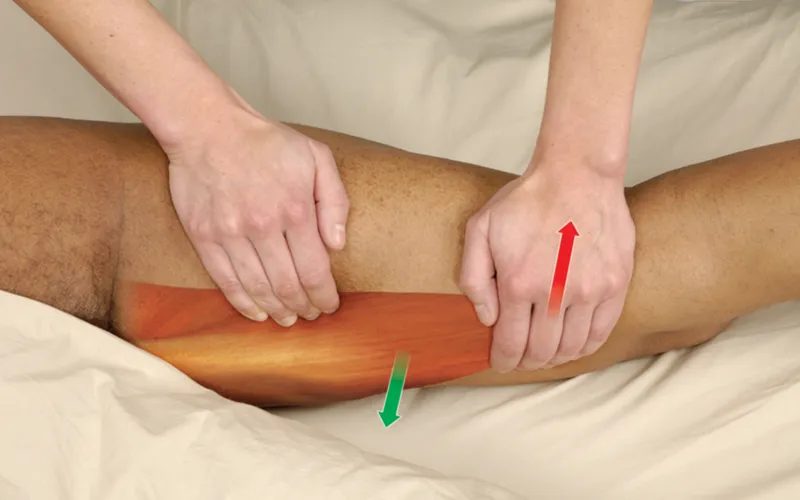
Positioning: client prone.

Editor's note: The Client Homework element in Functional Anatomy is intended as a take-home resource for clients experiencing issues with the profiled muscle. The stretches identified in Functional Anatomy should not be performed within massage sessions or progressed by massage therapists, in order to comply with state laws and maintain scope of practice.
Understanding how the pericardium relates to breathing can in turn help clients relax into their massage session.
Superficial fascia may not get the same attention as deep fascia, but it plays an extremely important role in the organization of tissues and the structure of the body.
Understanding tendons—their shapes, lengths, and organization—improves an MT’s touch vocabulary and facilitates a more skilled touch.
While the neck is a bridge, a pathway, the position of the neck and head can also indicate a multitude of other things happening beneath the surface.